Cooking teachers often explain that leftovers do not fail because they are leftovers. They fail because they are treated like a pile instead of a meal. A better cleanout dinner usually depends on giving each ingredient a role. Once the cook knows what is providing body, what is bringing freshness, and what is tying the plate together, the dinner starts feeling intentional rather than improvised.
Why do fridge-cleanout dinners so often feel messy?
Many cleanout meals are built by trying to use everything at once. That usually creates a dinner with too many ingredients leaning in the same direction. Several soft leftovers, one heavy sauce, and one tired vegetable can make the plate feel crowded without actually feeling complete. The meal may use things up, but it may still be disappointing.
Food educators often note that cleanout dinners work best when the cook edits rather than collects. The smartest question is not “What can go in?” It is “What does this dinner still need?” That shift turns the meal from a storage solution into something worth eating.
Start by choosing the anchor
Every fridge-cleanout dinner needs one central ingredient that gives it structure. This anchor might be cooked grains, pasta, potatoes, beans, eggs, or another practical base. Without that anchor, the meal can feel like scattered leftovers on a plate. With it, the rest of the ingredients have something clear to organize around.
Home cooking teachers often recommend deciding on the anchor before anything else. Once that part is clear, it becomes much easier to decide what should support it and what does not need to be included at all.
Do not let every leftover keep the same job it had yesterday
One of the smartest ways to make a cleanout dinner feel fresh is to stop forcing each leftover to behave exactly as it did in the original meal. Roasted vegetables do not have to stay a side dish. Rice does not have to stay under everything. A spoonful of sauce does not have to be used the same way it was the first time. Once leftovers are reassigned, the new meal becomes much more flexible.
This is often what separates a clever leftover dinner from one that feels tired. The ingredients are not only reused. They are repurposed into a new structure.
Think in contrasts, not categories
A strong cleanout dinner usually has contrast in texture and mood. If the anchor is soft, the meal may need something crisp. If the leftovers are all warm and rich, the plate may need something fresher. If the meal already has body, it may only need a sharper final touch rather than another heavy ingredient.
Fresh ingredient specialists often explain that contrast matters more than quantity in leftovers. A few ingredients that do different things usually create a stronger dinner than many ingredients that all feel the same.
Give the dinner one fresh element that belongs to today
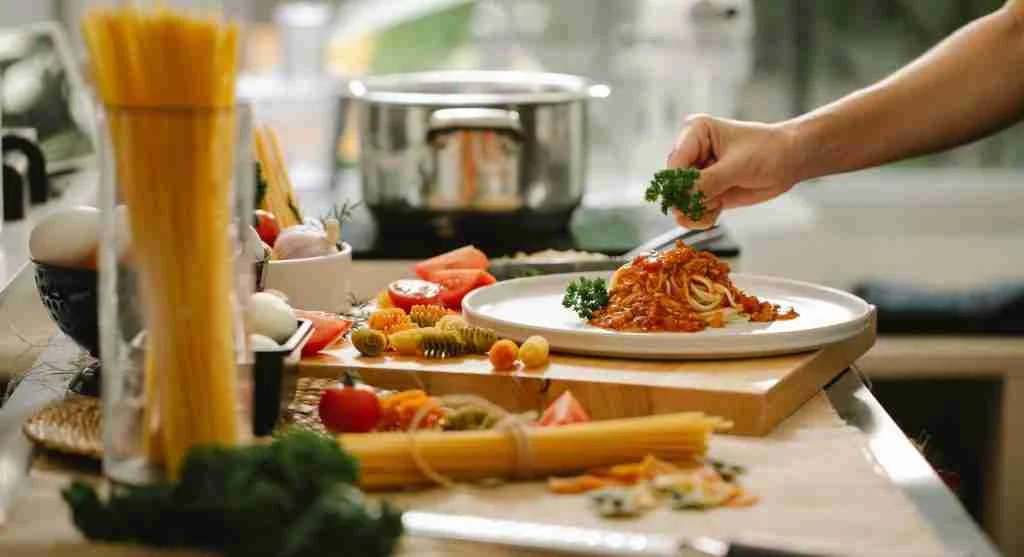
Many leftover meals feel stale because every part of the plate comes from yesterday. One fresh ingredient can fix that quickly. This may be herbs, greens, sliced cucumber, citrus, yogurt, or another light finishing ingredient that was not part of the original leftovers. Its job is not to dominate the dinner. Its job is to remind the eater that this meal belongs to now.
Cooking instructors often describe this as the “today ingredient.” Even a small amount of freshness can make the whole dinner feel more awake and less like a repeat.
Use heat only where it actually helps
Not every leftover needs to be reheated just because the meal is happening at dinner. Some ingredients become better warm, while others only lose texture when they are heated again. A stronger cleanout meal often uses warm and cool elements together instead of forcing everything into one temperature.
Food writers often point out that mixed temperatures can make a meal feel more layered. Warm rice with cool yogurt, reheated vegetables with fresh herbs, or warm beans with crisp cucumber can all create a much more interesting plate than one where everything is equally hot and equally soft.
Watch out for the “all soft” problem
One of the most common leftover dinner mistakes is ending up with a bowl or plate where every ingredient is soft. Soft rice, soft vegetables, soft beans, and a soft sauce may all taste acceptable and still make the meal feel flat. That is why texture is often more important than adding another seasoning.
A crisp topping, toasted bread, fresh greens, seeds, or a raw vegetable can all change the feel of the meal immediately. The goal is not crunch for its own sake. The goal is to stop the dinner from sinking into one repeated texture.
Let one ingredient connect the rest
Most cleanout dinners need something that ties the plate together. This may be a yogurt-based sauce, a vinaigrette, a spoonful of pesto, a citrus finish, or another simple bridge ingredient. Without it, the leftovers may remain separate pieces. With it, they begin to feel like one meal.
Meal planning educators often say that this connecting element is what gives a cleanout dinner identity. Even when the leftovers came from different meals, one shared finish can make the new dinner feel coherent.
How can home cooks know when to stop adding things?
This is one of the hardest parts of fridge-cleanout cooking. Once several containers are open, it becomes very easy to keep adding. A better rule is to stop when the meal already has body, freshness, contrast, and one connecting element. More ingredients do not necessarily make the dinner stronger. Often they only make it harder to understand.
Cooking teachers often remind home cooks that a cleanout dinner does not need to use everything. It only needs to use enough to make a good meal. That mindset makes leftovers much easier to handle well.
Frequently Asked Questions
Q: What is the easiest way to make leftovers feel like a real dinner?
A: Start with one anchor ingredient, add one fresh element, create texture contrast, and finish with something that ties the meal together.
Q: Why do fridge-cleanout meals often feel boring?
A: They often feel boring when every ingredient is soft, when too many leftovers are used at once, or when nothing fresh is added at the end.
Q: Does every leftover have to be reheated?
A: No. Some cleanout dinners are stronger when warm and cool ingredients are used together instead of reheating everything.
Q: Should a cleanout dinner try to use everything in the refrigerator?
A: Not necessarily. The goal is to make a good meal, not to empty every container in one sitting.
Key Takeaway
How to build a fridge-cleanout dinner is really about structure, not desperation. A strong version begins with one anchor, uses contrast instead of clutter, includes one fresh ingredient that belongs to today, and finishes with something that connects the plate. Those small decisions make leftovers feel intentional rather than random. In everyday cooking, that can turn the most ordinary containers in the refrigerator into a much better meal.